
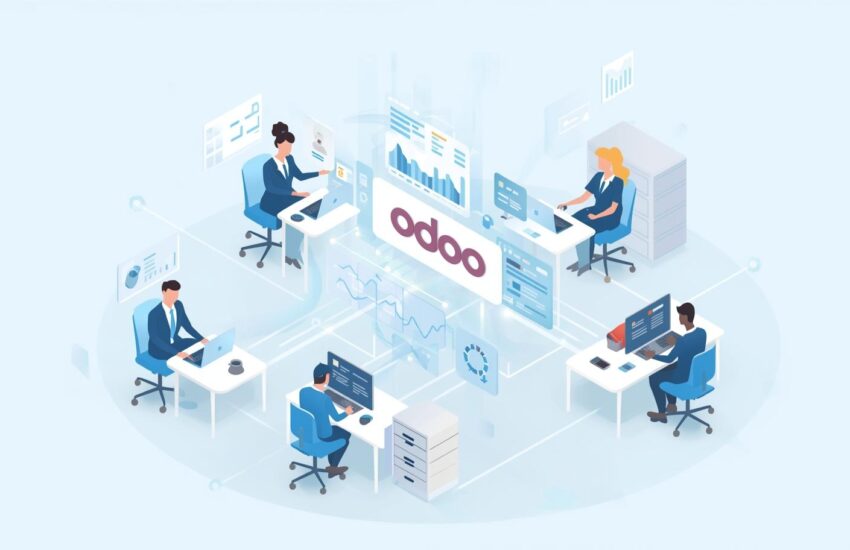
These days, with how fast business moves, everyone needs to work together across different teams. It’s not just a nice-to-have; it’s absolutely vital if a business wants to grow, be efficient, and keep its customers happy. But a lot of companies are still dealing with systems that don’t talk to each other, sharing info by hand, and teams not really communicating well. Sales uses one tool, finance another. HR is stuck in spreadsheets, and operations has its own separate system. Things end up getting delayed, mistakes happen, and we miss out on good chances.
Odoo integration really changes everything for the better. When all your systems, how you get things done, and your data are brought together into one platform, it really helps businesses break down those walls, letting everyone on the team work a lot better together. When everyone in a department works with the same real-time info and a single source of truth, they can truly collaborate in ways that are quicker and smarter.
Understanding Odoo Integration in a Business Context
Odoo is like a Swiss Army knife for businesses; it’s an ERP system made up of different parts that can help you with all sorts of things, from selling stuff and handling money to keeping track of your stock, managing your team, making products, and even taking care of your customers.
Odoo is great in itself, but what makes it truly powerful is how well it works with our own modules and other apps. So, Odoo integration is basically about linking up all your different departments, tools, and outside systems. This way, information can just flow by itself throughout the whole company.
Instead of constantly moving info by hand between different systems, it’s way better if they’re all connected. That way, everyone in every department can always see the right, most current data the moment it changes. With well-planned Odoo ERP integration services, businesses can really bring everything together, make their work smoother, and get all their teams heading in the same direction for their goals.
Why Cross-Department Collaboration Is a Common Challenge
Working together across different departments can be really tough, and it’s a common challenge for a lot of businesses. A lot of companies struggle with teamwork, not because people lack skills or motivation, but because their systems aren’t designed to communicate.
Folks often run into problems like closing deals without inventory visibility, finance receiving delayed billing data, HR struggling with workforce allocation, and operations slowing down due to outdated information. When departments don’t communicate, even small misunderstandings can turn into costly issues.
How Odoo Integration Connects Core Departments
Sales and Marketing Working in Sync
When workflows are connected, customer info moves easily from marketing into sales. Sales teams instantly see new leads, engagement history, and interests, allowing them to personalize communication and close deals faster.
Finance and Accounting Alignment
When accounting connects with sales, purchasing, and expenses, finance teams gain real-time visibility into cash flow and revenue. Automated invoicing, accurate payment tracking, and faster reporting lead to fewer errors and smarter decisions.
HR and Operations Collaboration
When HR data is connected, operations teams can plan resources better by matching availability, skills, and workload with project needs, improving overall productivity.
Inventory, Procurement, and Supply Chain
Inventory updates automatically based on sales and production. Procurement teams receive timely alerts, operations plan efficiently, and customer-facing teams provide accurate delivery timelines, creating a smoother supply chain.
Key Benefits of Improved Collaboration Through Odoo
When everything works together:
- All departments use the same real-time data
- Decisions are faster and more accurate
- Manual work is reduced through automation
- Processes become more transparent
- Customers receive consistent service
Breaking down silos allows teams to work together instead of operating independently.
Why Custom Integration Makes a Difference
Every business has its own workflows, tools, and operational needs. A one-size-fits-all solution often fails, especially when legacy systems or industry-specific processes are involved.
This is where custom Odoo integration services play a key role. They help businesses connect older systems, automate department-specific tasks, align with industry requirements, and scale integrations as the organization grows.
Real-World Collaboration in Action
Manufacturing companies can link sales forecasts directly to production planning. Service businesses can sync HR, project management, and billing to track resources and revenue in real time. Retailers can align eCommerce, inventory, and finance to prevent stockouts and revenue loss.
These examples show how integrated systems transform disconnected tasks into smooth workflows.
Choosing the Right Integration Partner
Successful integration requires experience, technical expertise, and a strong understanding of business processes. The right partner evaluates existing systems, designs scalable solutions, and ensures smooth implementation.
Working with an experienced provider like Erpocean helps businesses unlock the full value of Odoo integration services by building connected systems that support collaboration and long-term growth.
Building a Connected Organization with Odoo
Cross-department collaboration is essential for modern businesses. Without integration, data remains fragmented, and growth becomes difficult. Odoo brings teams together by enabling real-time data sharing, automated workflows, and organization-wide visibility.
With the right strategy, businesses can eliminate silos, improve efficiency, and empower teams to collaborate with confidence.
Are departments struggling to stay aligned?
Get in TouchFrequently Asked Questions
1. What is Odoo integration, and how does it improve collaboration between departments?
Odoo integration connects different business modules and external tools into a single system, allowing departments to share real-time data. This reduces manual work, avoids data mismatches, and helps teams coordinate tasks more efficiently across sales, finance, HR, and operations.
2. Why do businesses face cross-department collaboration issues even after using an ERP?
Many businesses use ERP systems without fully integrating all departments or third-party tools. As a result, teams still rely on separate systems, spreadsheets, or manual updates, which leads to data silos, delays, and communication gaps.
3. Can Odoo integration help reduce manual work and data errors?
Yes, Odoo integration automates data flow between departments, eliminating repetitive data entry and reducing the risk of human error. Automated workflows ensure that information is updated consistently across the organization.
4. Is Odoo integration suitable for small and growing businesses?
Absolutely. Odoo’s modular and scalable architecture makes it suitable for businesses of all sizes. As companies grow, integrations can be expanded to support new departments, tools, and workflows without disrupting existing operations.
5. How does ERPOcean support businesses with Odoo integration?
ERPOcean helps businesses implement Odoo integrations that align with their operational workflows. By focusing on seamless system connectivity and scalable architecture, they enable organizations to improve collaboration, operational efficiency, and long-term growth.